February Notes from the Potting Shed
With Gardening Expert Chris Milborne
February weather can be challenging for gardening, with cold, wet and windy days reminding us that winter is not yet over and that spring can still feel a long way off. Yet there are also glorious spells of blue sky, and the daylight is visibly lengthening, bringing a sense of quiet anticipation. These are the days for planning and preparation, for finishing pruning and tidying, and for putting the garden in order. Overgrown wisteria should be untangled, with all shoots brought back to a controlled framework so that growth in the coming months is both tidy and productive.
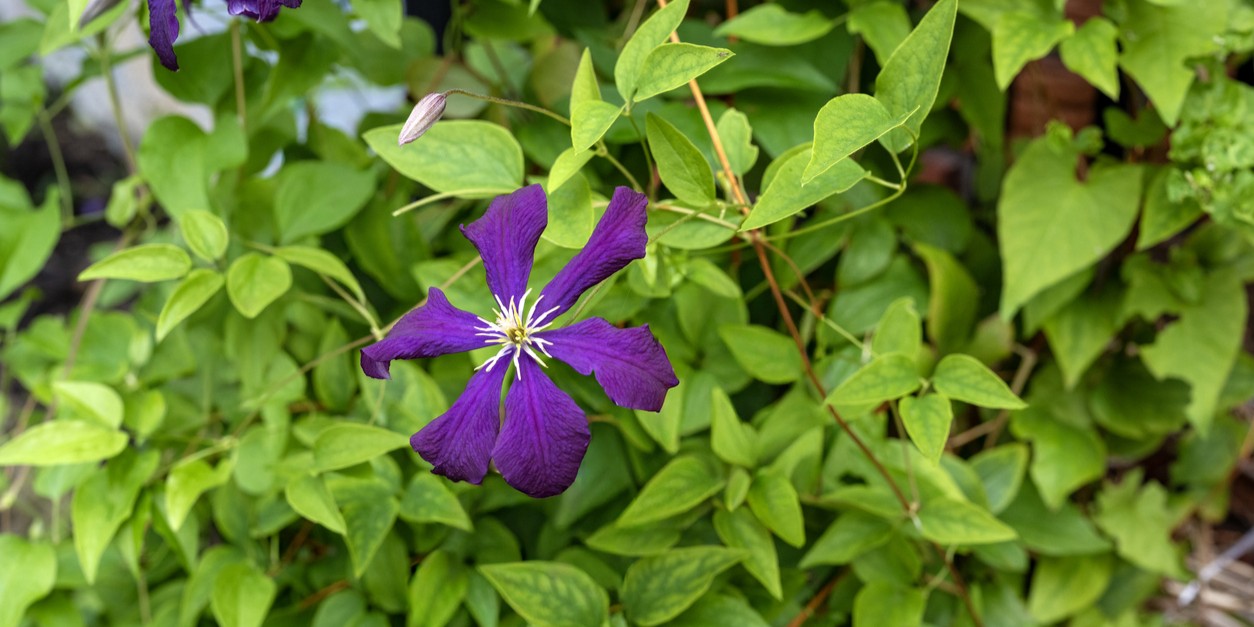
Certain clematis should now be pruned. If you have lost the label or are unsure of the variety, a simple rule applies: those that flower before July are left alone, while the late-flowering types, such as viticella - one of my favourites with its dainty single flowers - should be cut back hard.
As February progresses, small but heartening changes appear throughout the garden. Catkins hang from branches, snowdrops stand in full flower, and crocus, aconites and hellebores bloom. In sheltered spots beneath trees and hedges, primroses appear: pale yellow with deep yellow centres, lightly scented and full of subtle beauty, offering a true sign that spring is on its way. By the end of the month, tomato seeds, peppers and half-hardy annuals can be sown in a heated propagator, marking the first real steps of the new growing season.
In new beds and borders, where shrubs and perennials are still becoming established, I rely on annual flowers grown from seed. These are easy to grow and provide colour throughout summer, filling gaps until permanent planting matures and the structure of the garden begins to settle.
On the allotment I grow cut flowers for the house: sunflowers in shades from creamy yellow to burnt orange, cosmos that flower from summer into autumn, along with cornflowers, marigolds, larkspur, bedding dahlias, zinnias, annual rudbeckias and sweet peas, especially the scented varieties. Together they offer endless colour combinations, from rich reds, yellows and oranges to pinks, peaches and creamy pastels. I grow them in mixed blocks or in single-colour drifts, creating displays that are both striking and harmonious, wonderful for pollinating insects and invaluable for providing beautiful cut flowers straight from garden to vase. Now is the time to select seeds for these cottage-style schemes.
Hardy annuals can be sown directly into the soil from March to April when conditions allow, so now is the time to prepare the ground by forking over, hoeing and raking to a fine tilth, and adding compost along with an organic fertiliser. Half-hardy annuals need warmth to germinate and are best sown in a propagator from late February into March. Once seedlings develop their first true leaves, they can be pricked out into individual pots or modular trays and grown on in a frost-free greenhouse, cold frame or polytunnel, ready for planting out in early May.
Dahlia tubers should be potted up and placed in an unheated but frost-free greenhouse. With their enormous range of colours and forms, their usefulness in tubs, borders and beds, and their ability to flower for months on end, dahlias deserve a place in every garden. At this time of year a wide range of herbaceous plants in 1-litre pots also becomes available, and these can be potted into 3-litre containers, grown on and planted out in a couple of months to create an instant display.
If you want to get ahead, prepare the soil for new roses, shrubs, trees and perennials by digging in organic compost and, where the soil is heavy, adding coarse grit to improve drainage. Mulching around existing plants helps conserve moisture and improve soil structure. A spring favourite is the ornamental flowering cherry on semi-dwarf rootstock, which produces a compact tree well suited to smaller gardens, with flowers ranging from pure white to deep pink in single, semi-double or full double forms, and foliage that provides fine autumn colour.

At the end of February, I feed trees, shrubs, perennials, roses and ericaceous plants with a suitable or balanced fertiliser, then begin the spring tidy of herbaceous perennials by cutting back old growth and decaying stems before new shoots emerge. It is heartening to see fresh growth at winter’s end, and far easier to avoid damaging it if old stems are removed early. Grasses should also be tidied, with dead material removed from evergreen types, though they are best left undisturbed for division until later in the season when growth is active. With hellebores, removing old, diseased leaves allows the flowers to be seen clearly and improves air circulation.
If tubs and containers lack interest, primulas and polyanthus can be added for instant colour, while pots of early daffodils can be dropped into any gaps. After winter frosts and snow, it is also wise to check that newly planted trees and shrubs remain firm, as freezing and thawing can loosen the soil around their roots.
Vegetable beds can be covered with fleece or cardboard to warm the soil for early sowing. Seed potatoes - whether first earlies, second earlies or maincrop - should now be “chitted” by allowing strong shoots to form before planting. In the greenhouse, two seed potatoes can be planted in a 30cm pot, kept frost-free and moved outside in May for an early crop by late June. Strawberries benefit from being covered with cloches for earlier fruit, while onions, shallots and garlic can be started in modular trays and planted out once they are growing and the soil has warmed.
Above all, enjoy the February garden, with the scent of Sarcococca, Skimmia, Daphne and Mahonia, and the yellow and orange flowers of witch hazel. As we move into March - a month of planting, sowing and potting on - there never seem to be enough hours in the day.